
A lip mask can look like a balm in a prettier jar. A balm can be thick enough to wear overnight. And a hydrogel patch is usually gone before you have finished an episode of television. So what, exactly, changes when you switch formats?
The short answer: how long the product stays put and how you want to use it. None of these is a required extra step. If your lips feel comfortable with a simple balm, keep using it. If they feel dry again by morning, an overnight layer may be more useful than another scrub. Here is how to choose without buying three versions of the same idea.
Why lips feel dry so quickly
Lip skin is thin and exposed to wind, dry indoor air and the friction of eating, drinking or wiping your mouth. Repeated licking can make the dry feeling worse as saliva evaporates. A moisturizing product helps by adding emollients that soften the surface and a film that slows water loss. It cannot, on its own, treat a medical cause of persistent cracking or irritation.
That distinction matters because flaky lips invite aggressive exfoliation. Resist the urge to peel loose skin or scrub a sore spot with sugar. When the surface is already tender, friction can make it feel worse. Start with a gentle protective layer and give it time.
The everyday choice: a balm you will actually reapply
A balm earns its place in a pocket or desk drawer. Apply a thin layer when your lips feel tight, after eating, and before lipstick if the formula sits comfortably underneath. Texture and scent are personal: a rich coconut balm may feel pleasant at night but too glossy for a matte lip colour.
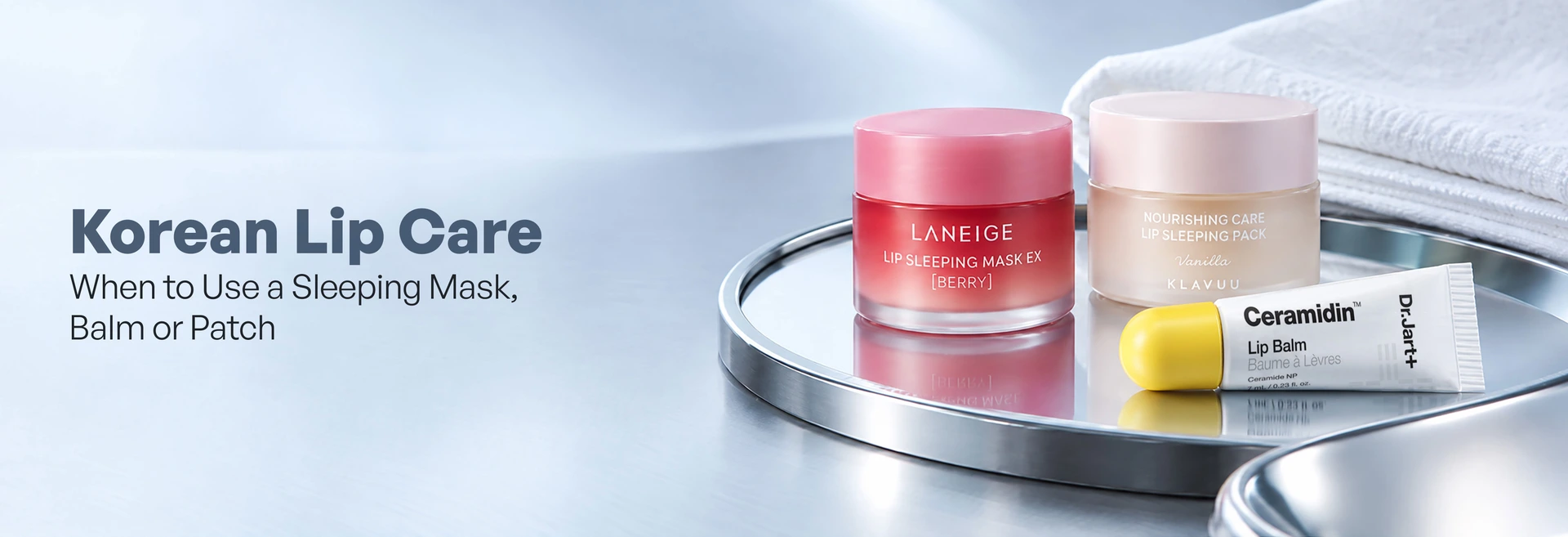
Dr. Jart+ Ceramidin Lip Balm is the compact option here. The product page describes a moisture-melting texture and suggests using it before or after lip makeup, or more generously before bed. KLAVUU Nourishing Care Lip Sleeping Balm [Coconut] is a richer, scented alternative described as a plant-oil-based balm. If fragrance bothers your lips, check the full ingredient label and patch-test rather than assuming a comforting scent will be comforting to skin.
Neither product needs a complicated ritual. Use enough to leave a comfortable film, not so much that it slips beyond the lip line.
The overnight choice: a sleeping mask
A lip sleeping mask is usually a thicker leave-on layer intended to remain on the lips through the night. It makes sense if daytime balm feels good but your lips still wake up tight. Think of it as a longer-wearing moisture seal for overnight comfort.
LANEIGE Lip Sleeping Mask EX Berry is the familiar glossy-jar format, with a cushioned texture designed for overnight use. Its berry-complex formula is designed for dry, flaky-feeling lips. KLAVUU Nourishing Care Lip Sleeping Pack Vanilla offers a more oil-rich, vanilla-scented alternative. SKINFOOD Honey Sugar Food Mask Lip Sleeping Pack is the honey-and-sugar option; its product description emphasizes a glossy, nourishing finish. The presence of sugar in its name is not permission to scrub cracked lips. Follow the actual product directions and keep application gentle.
At bedtime, remove lip colour, apply a modest even layer to clean lips, and leave it alone. In the morning, wash or wipe away any residue gently if you prefer. A heavy mask is optional on days when a standard balm already feels sufficient.
Where a hydrogel lip patch fits
A hydrogel patch is a short-session treatment rather than an overnight seal. It covers the lip area temporarily, so it can be a pleasant prep step before makeup or a moment of comfort when you are sitting still. It is less practical for sleeping, eating or repeated daytime protection. Follow the patch’s stated wear time; leaving it on longer is not automatically better.
A patch is an optional format, not a necessary purchase alongside a mask and balm. If you use one, check its ingredient list and directions, and follow with a balm if your lips need lasting protection. Skip patches over broken or irritated skin unless the label explicitly says they are suitable.
A simple way to decide
| If you want… | Start with… | Why |
|---|---|---|
| Something easy to carry and reapply | A lip balm | Quick, flexible protection during the day |
| A layer that stays on while you sleep | A sleeping mask | A more substantial overnight film |
| A brief pre-makeup ritual | A hydrogel patch | A temporary covered treatment, followed by balm if needed |
You do not need to stack a patch, balm and mask every night. Try one change at a time so you can tell what feels comfortable. If a product stings, makes the area red or triggers repeated peeling, stop using it. Persistent cracks, especially at the corners of the mouth, deserve advice from a healthcare professional rather than another cosmetic layer.
The best lip-care routine is unremarkable: protect during the day, add a richer layer at night only if you need it, and treat the delicate surface gently. A good balm can do most of the work; a mask is an option, not a promotion ceremony for your lips.